By Lawrence Wilson, MD
© March 2014, The Center For Development
One of the major procedures that is part of most nutritional balancing programs is the use of a sauna made of three or perhaps four reddish 'heat lamps'. These are large, 250-watt, reddish incandescent bulbs. (Do not use other types of bulbs.) The 'heat lamps' are sold at many hardware stores, Cal Ranch on the internet, and even at Walmart. They are called "heat lamps", but they emit red, orange, and yellow light, and some near and middle infrared rays, as well.In some cases, however, the sauna is not best. These situations include:
1. I do not recommend sauna therapy for pregnant women, or for babies, or for children under 5 years of age.
2. If one cannot afford a sauna (about $600.00).
3. For shining the light on areas of the body that are hard to reach with the fixed lamps in a lamp sauna.
4. Perhaps, if one is very debilitated.
In these situations, the use of a single reddish heat lamp can be wonderful, and even lifesaving. This article discusses this very simple, yet often very helpful form of healing therapy.
CONDITIONS THAT MAY BENEFIT FROM SINGLE LAMP THERAPY
An isolated reddish infrared heat lamp directed at an area of the body provides excellent and often surprising benefits. Single lamp therapy, in our experience, is simple, inexpensive and safe when properly handled.
Conditions that may benefit, often after just a few treatments, include joint pain, muscle strains, skin rashes, acne, boils and some conditions of the eyes, nose, ears and sinuses. Neck, shoulder, elbow, knee and back pain may also respond. Bladder and vaginal conditions may also respond nicely, especially when lamp therapy is combined with a complete nutritional balancing program.
One patient had a sinus infection that did not respond to antibio-tics or to natural healing methods. She was weak and feverish every even-ing and had constant headaches. By shining an infrared lamp on the sinuses for 10 minutes at a time, six times a day, relief occurred in two days with complete elimination of all symptoms in five days. The patient continued to use the lamp for another two weeks because she said the red light felt wonderful.
Relief in one or two days has also occurred in cases of low back pain, knee pain, nerve root irritation and other local conditions. One can safely shine the lamp on any area of the body in need of healing. However, never shine it on the head area for more than 10 minutes at a time, and a little less for children.
It can also be used on pets and large animals such as horses. Do not place a pet in a sauna, as animals can easily overheat.
HOW IT WORKS
Infrared energy heats the body from the inside, up to several inches deep. The heat and other frequencies the lamps offer improve the circulation, hydration and oxygenation, and often disable or weaken harmful microorganisms, including those that cause Lyme disease and many other conditions. Near infrared also has other healing effects, according to some research.
Apparently, the frequencies emitted by this particular lamp are ex-tremely beneficial.
WHAT BULB OR GLOBE TO BUY
Purchase a 250-watt, reddish 'heat lamp'. They cost between about $10-15.00 USD. Do not use a clear bulb, a halogen bulb or any other type.
Companies that make these bulbs include Sylvania, Philips, Havel-Sli, Westinghouse, General Electric, FEIT and perhaps others. They are all very similar, and any of them are fine.
The bulb need not be pure red - the color varies from a yellowish to a deeper red color. These bulbs are often sold for use in chicken coops as brooder lamps. They are also used in some restaurants to keep food warm, and they are found in some people's bathrooms to heat up the bathroom.
Also, purchase a clamp-on lamp socket rated for at least a 250-watt light bulb. It costs about $10.-20. USD and they are sold at many hardware stores. It should have a guard or reflector and ideally the guard should prevent the possibility of touching the bulb itself, which is extremely hot.
In America, you may buy a reddish heat lamp and a clamp-on socket at most hardware stores such as True Value Hardware, Ace Hard-ware, Home Depot, Lowe's and some Walmart stores.
In Europe: Here is a website to purchase the bulbs in Europe (220 volt version):
http://www.amazon.co.uk/Eveready-Finish-Glass-Edison-Screw/dp/B005XKIFY0/ref=sr_1_6?ie=UTF8&qid=1344334552&sr=8-6
In Australia: Here is a website to buy a heat lamp in Australia (also 220 volts):
https://www.lightonline.com.au/infrared-reflector-heat-lamps/philips-infrared-double-reflector-heat-lamp-250w-red
SINGLE LAMP USE
Use the lamp five to sixty minutes per session, two to ten times per day. If you are using it on your head area at all (ears, sinuses, etc.) use it no more than 10 minutes at a time, and a little less for children.
One sits about 12" to 24" from the lamp and moves the lamp around the area during the treatment. Allow the area to become as hot as one can comfortably tolerate. If the lamp is fixed, move the body slightly. Keeping the lamp on one spot for more than a few minutes causes a slight reddening of the skin that will go away and is not harmful. You will not get a tan from this lamp. Do not touch the lamp and do not keep it on one spot if you feel a burning sensation.
A simple way to do therapy is to clamp the lamp socket to a shelf and sit comfortably near the lamp so that it shines on the desired part of the body without causing strain.
CAUTIONS WITH SINGLE LAMP THERAPY
* When using the lamp on your head area, use it for no more than 5-10 minutes at a time.
* Move the lamp back and forth slightly or move the body part it is directed toward.
* Close the eyes when directing the lamp at the eyes, nose or sinuses.
* Do not use the lamp on an injury for the first 24 hours following the injury.
* Avoid touching an infrared lamp when hot. Also avoid placing it on any surface when hot to avoid igniting or burning the surface.
* Avoid banging the lamp around and avoid splashing water on it, as these could cause it to break.
All information in this article is for educational purposes only. It is not for the diagnosis, treatment, prescription or cure of any disease or health condition.
Source : http://www.nutritionalbalancinglifestyle.com/single-red-heat-lamp.php





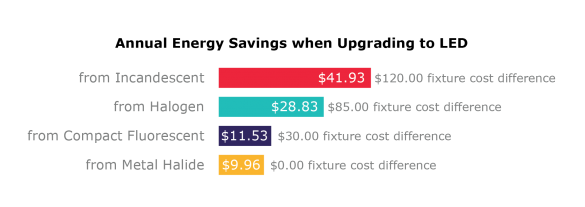
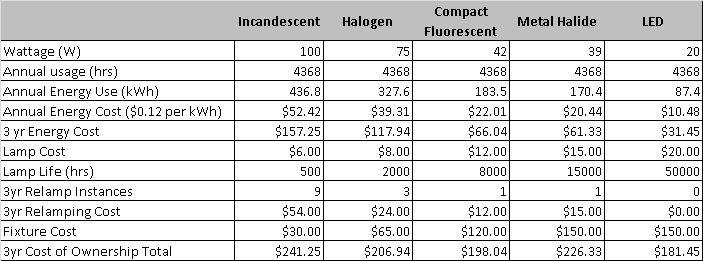
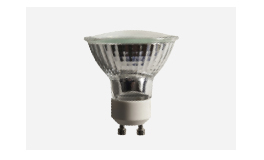 Halogen: A
more advanced form of incandescent, the halogen bulb uses halogen gas
and a tungsten filament to increase light output and efficiency of the
incandescent light bulb. They are known for slightly higher efficiency
than typical incandescents, and a brighter, whiter light than is
provided by the original incandescent bulb. Halogen lamps are usually
the first choice for homeowners, as they are better suited for
directional aiming of fixtures and provide more focused beam patterns
when used in reflector-lamp formats. Halogen lamps are often used on
movie sets and in auto headlights, and are typically found in spotlights
and floodlights. General Electric was the first to patent and sell this
bulb in 1959. The biggest drawback? The exceptionally short lamp life,
similar to that of incandescent lamps, makes these expensive to
maintain, especially in high or hard-to-reach locations. Learn more
about
Halogen: A
more advanced form of incandescent, the halogen bulb uses halogen gas
and a tungsten filament to increase light output and efficiency of the
incandescent light bulb. They are known for slightly higher efficiency
than typical incandescents, and a brighter, whiter light than is
provided by the original incandescent bulb. Halogen lamps are usually
the first choice for homeowners, as they are better suited for
directional aiming of fixtures and provide more focused beam patterns
when used in reflector-lamp formats. Halogen lamps are often used on
movie sets and in auto headlights, and are typically found in spotlights
and floodlights. General Electric was the first to patent and sell this
bulb in 1959. The biggest drawback? The exceptionally short lamp life,
similar to that of incandescent lamps, makes these expensive to
maintain, especially in high or hard-to-reach locations. Learn more
about 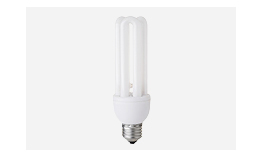 Compact fluorescent: CFLs
don’t use a filament to produce light; instead they use a glass tube
coated with phosphors that contains a small amount of argon and mercury
vapor and electrodes at one end. When electricity is applied, the
electrodes generate an invisible ultraviolet light that then excites the
fluorescent coating on the inside of the tube to produce visible light.
Initially the bulb takes a little longer to turn on, but once on they
use about 70% less energy than the equivalent incandescent lamp. The
color quality of compact fluorescent lamps is usually subpar as compared
with halogen and incandescent, and the dimming performance is not as
smooth either, rarely getting down to the minimum light levels that
incandescent and halogen can. However, the lamp life is significantly
longer - lasting up to 10,000 hourrs and more. Learn more about
Compact fluorescent: CFLs
don’t use a filament to produce light; instead they use a glass tube
coated with phosphors that contains a small amount of argon and mercury
vapor and electrodes at one end. When electricity is applied, the
electrodes generate an invisible ultraviolet light that then excites the
fluorescent coating on the inside of the tube to produce visible light.
Initially the bulb takes a little longer to turn on, but once on they
use about 70% less energy than the equivalent incandescent lamp. The
color quality of compact fluorescent lamps is usually subpar as compared
with halogen and incandescent, and the dimming performance is not as
smooth either, rarely getting down to the minimum light levels that
incandescent and halogen can. However, the lamp life is significantly
longer - lasting up to 10,000 hourrs and more. Learn more about 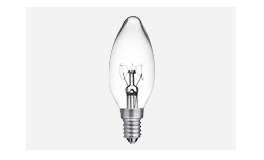 Metal halide: High
intensity discharge technology is an arc lamp technology which was
developed in the 1960’s. Inside a glass envelope filled with argon gas
is an arc tube made of either quartz or ceramic and contains mercury and
metal halide salts. The mixture of gas, mercury and halide salts within
the tube generates an intense bright white light once heated by the
electric arc contained inside. Metal halide lamps are very efficient,
have excellent lamp life (some over 20,000 hours), and are capable of
putting out a tremendous amount of light, so they’re typically used for
high ceiling applications where lots of light is needed, stadium lights,
roadway lighting, and parking lot and other exterior lighting
applications. The main drawback of metal halide lamps has to do with
switching and dimming. Most metal halide lamps cannot turn on while
"hot", which means if the power goes out, a restrike time of 15 to 20
minutes is required in order for the lamps to cool off enough to turn
back on again. In addition, they are nearly impossible to dim. So
although they are great at putting out a lot of light, hopefully that's
what you want - because there is only one setting, and that's at 100%.
Learn more about
Metal halide: High
intensity discharge technology is an arc lamp technology which was
developed in the 1960’s. Inside a glass envelope filled with argon gas
is an arc tube made of either quartz or ceramic and contains mercury and
metal halide salts. The mixture of gas, mercury and halide salts within
the tube generates an intense bright white light once heated by the
electric arc contained inside. Metal halide lamps are very efficient,
have excellent lamp life (some over 20,000 hours), and are capable of
putting out a tremendous amount of light, so they’re typically used for
high ceiling applications where lots of light is needed, stadium lights,
roadway lighting, and parking lot and other exterior lighting
applications. The main drawback of metal halide lamps has to do with
switching and dimming. Most metal halide lamps cannot turn on while
"hot", which means if the power goes out, a restrike time of 15 to 20
minutes is required in order for the lamps to cool off enough to turn
back on again. In addition, they are nearly impossible to dim. So
although they are great at putting out a lot of light, hopefully that's
what you want - because there is only one setting, and that's at 100%.
Learn more about